Stuck in the Present

CONSISTENCY MATTERS!

From Rabbi Evan Moffic:

Consistency is not just practical. It is sacred. 

In the Talmud—the ancient book of Jewish laws and wisdom—the rabbis debate the most important verse of the Bible. 

One rabbi says it is the Shema. We know that prayer. Jesus quoted it as well. Taken from Deuteronomy 6:4, it reads, “Hear, O Israel: The Lord is our God, the Lord is one.”  

This is a solid answer. Belief in one God is the foundation of the Jewish faith. 

Another rabbi suggests, however, that Leviticus 19:18 is the better choice, Known as the golden rule, it reads, “Love your neighbor as yourself.” It’s hard to argue with this answer. 

Finally, another sage gives a third option. He quotes an obscure verse from the book of Exodus.

“Offer one in the morning and the other at twilight” (Exodus 29:39), he says, referring to the daily sacrifice offered by the priests every morning and every evening in the Jerusalem Temple. 

What a odd choice! It’s like comparing a toaster’s instruction manual to Shakespeare’s Hamlet. The third rabbi’s answer doesn’t even seem to be in the same league as the first two. 

Yet, all the other rabbis quickly agreed with this final answer! 

What were they thinking? They recognized, I think, that the little things are the big things.

It’s easy to be righteous every once in a while. It’s easy to say we believe in God…or promise to live by the golden rule. 

It’s another thing to live our values every day. A rainbow is beautiful when it is in the sky. But it is fleeting, soon forgotten. 

The sun, however, rises every morning and sets every evening. Like the motions of the sun, God guides us to make our faith constant and consistent. 
YALE LOG PART 1

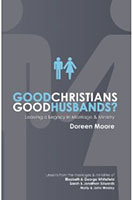
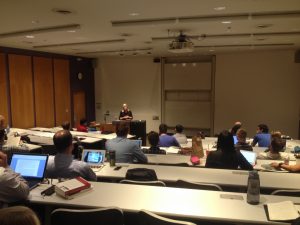
Some of you know that we came to Yale so Doreen could begin to do intensive research on Sarah Edwards, wife of Jonathan.  Most of you know that Doreen’s first book is on the ministries/marriages of Jonathan/Sarah Edwards, George/Elizabeth Whitefield, and John/Molly Wesley.  Doreen’s book is used as a required text by a professor of history and theology at Dallas Theological Seminary (DTS).  It is gratifying to hear how the students appreciate Doreen’s hard work.  Here is recent picture of Doreen speaking at DTS.

We usually stop in Dallas on our treks back east.  Our wonderfully encouraging friends, Bill and Helen Reeves, welcomed us into their lovely abode on our way to New Haven, CT.

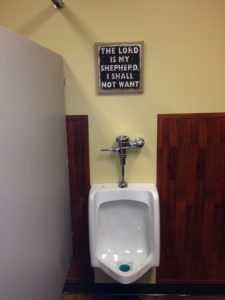
Our first big stop was in Knoxville, Tennessee.  Doreen’s sister and brother-in-law live there.  I was reminded that we were in the Bible belt when I stepped into the restroom of a Christian bookstore.  I guess several biblical truths could work like “Go…and Make Disciples!”

We made it safely to Yale.  Here is Dr. Ken Minkema, the Director of The Jonathan Edwards Center at Yale.  We had a terrific and productive time with him. 

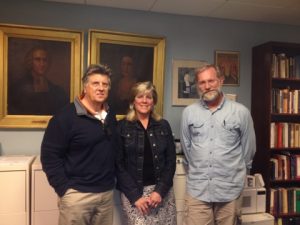
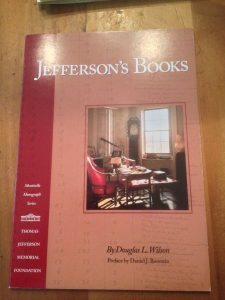
I close this log with a few pictures from one of our study locations.  These are from the Yale Divinity library.

A peek out our window…


HAPPY FATHER’S DAY!

Image result for George Moore of phoenix

Above is a picture of my Dad.  Still going strong, or as he might say, kind of strong, at nearly 92 years of age.
Five things immediately come to mind when I think of my Dad:
*His work ethic
*Sense of humor
*Putting a premium on friendships
*Meaningful ministry in various places and with various people, including the very poor
*And perhaps most of all, his contentment in God no matter what life throws at you


CYNICISM

Cynicism is easy.

Cynicism is toxic.

Cynicism is deceptive.

A cynic believes they have corralled all of reality into their own little brain and determined that things are bleak indeed.  There is, however, a very big problem.  No one can know all reality, except God.  And God tells us that a mark of being a Christian is hope.

So, since no one is omniscient, no one has the right to be cynical.  There are all kinds of realities the cynic does not know about that would change their pessimistic outlook.

FRIENDSHIPS: OLD AND NEW

A brief reflection of mine to a friend wondering if pastors could be friends with those in their congregation.  My answer is “yes,” but my advice for all Christians is to choose wisely.  Here is my brief reflection:

You may know that Augustine wrote more about friendship than anyone else in the ancient period so his perspective adds light to our discussion.  Cicero, whose writings Augustine loved, also wrote on friendship.  Cicero’s work is just a little before Christ so the two give nice bookends to the ancient world’s perspective on friendship.  Cicero said you can’t be friends with tyrants or sycophants.  Yes, I know there are loads of those in the churches!  And with the laxity on choosing elders there are plenty of them on elder boards.  But the perversion of a good thing does not eliminate the need for the good thing. 

CONVERSION

In her eminently fascinating book, Carolyn Weber writes about the questions she hurled at a fellow student.  She then observes:

I now understand why the words conversation and conversion are evocative of each other, turning toward each other, yet separated merely by where you are “at.”

(From Surprised by Oxford: a Memoir, p. 82)

https://www.amazon.com/Surprised-Oxford-Memoir-Carolyn-Weber/dp/084992183X


TYRANNY IN AMERICA?!

Image result for ON TYRANNY

https://www.amazon.com/Tyranny-Twenty-Lessons-Twentieth-Century/dp/0804190119/ref=sr_1_1?s=books&ie=UTF8&qid=1496973754&sr=1-1

The short answer to my subject line is “yes.” The longer, but still short answer of “yes” resides in this tract for our times. I heard someone say that On Tyranny reminded them of Tom Paine’s Common Sense, a short, but powerful rallying cry for all Americans. The comparison seems apt.

Before you write off the author as some conspiratorial loon, keep in mind that Snyder is an eminent scholar of Eastern European studies. And it is the study of Eastern Europe that gives credibility to this work. Most importantly, is the fact that Eastern Europeans appreciate that things can go terribly wrong. Believing that a “new day in America” means “an even better day” is naive and shows that we are ignorant of history. Many of us, including our Western European friends, were stunned by the election of Donald Trump. Eastern Europeans weren’t.

I have two quibbles with On Tyranny. Neither are that significant. In the book and in a few lectures I’ve heard, Professor Snyder uses “the end of history” without defining it. Some of us are very familiar with the idea popularized by Francis Fukuyama, but others could be helped by some unpacking of the idea. My other minor reservation revolves around a sentence that closes out Professor Snyder’s third action step. Here’s the sentence: “We can be sure that the elections of 2018, assuming they take place, will be a test of American traditions.” I think it is safe to say we are already being tested, but not having elections in 2018? That strikes me, even as a pretty grizzled “no Trumpster” as incautious.

Like I say those are quibbles. I am glad to see this book getting such a wide hearing.