Stuck in the Present

NASHVILLE STATEMENT

Nashville Statement

I would not sign it, even though I am in close agreement with the various articles.  Why?

It comes across as a sterile statement from too many who were either quiet or supportive of Trump. 

It is tone deaf in its timing: Charlottesville and now the flooding in Texas.

If the church in America had a better record of compassionate disagreement with gays, perhaps the statement would be okay.

I am glad, however, that this issue will force a more honest and comprehensive conversation about the Bible’s authority.

Here is a very good critique of someone who signed (HT: Peter Coelho):

On the Nashville Statement and My Signing of It

GREAT RESOURCE ON AMERICAN HISTORY

My general rule that so far holds up is this: Take the total number of pages of a book and divide by two.  If my marginal notes exceed that number, then the book, though I may have some serious disagreements with it, was worth reading.  

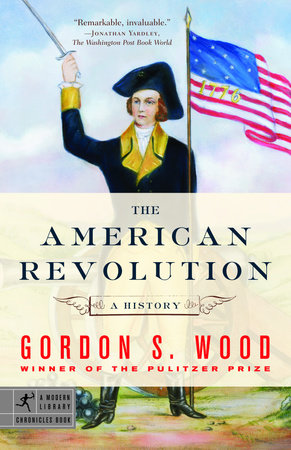
In this case, Wood’s little book on the American Revolution is 166 pages long.  My markings came in at over 150.  This was an extremely worthwhile read.

I read a lot of American history, but am always looking for resources to better connect events and people.  Wood’s book does not disappoint.

If you are looking for a short book to better understand the American Revolution along with a helpful explanation of the immediate years leading up to the Constitution, it is hard to imagine a better book.

https://www.amazon.com/American-Revolution-History-Library-Chronicles/dp/0812970411

Image result for THE AMERICAN REVOLUTION BY WOOD

Michael Cromartie, R.I.P.

Michael Cromartie, R.I.P.

I met Mike about twenty years ago.  We were in the beginning stages of launching Two Cities Ministries.  We had a wonderful lunch over Chinese food at a quiet place in Washington, DC.  Mike was one of the most influential Christian leaders you’ve probably never heard of.  He was full of energy, loved people, and was a great raconteur. 

Plutarch said “small” things can reveal a man’s character.  One thing stands out for me.  Though Mike and I hardly knew each other he was always very quick to answer any question I sent him via email. 

Through his creativity and tenacity Mike was able to win the trust of journalists across a wide swath of religious and political perspectives, no small feat!

HOW TO DEBATE

Most of us debate poorly.  There are a number of factors like not knowing what we believe as well as we should, presenting a caricature of an opposing position, and even if we don’t err with those two, we tend to get testy!  My number one resource for making improvement is The Righteous Mind: Why Good People are Divided by Politics and Religion by Jonathan Haidt.  I wish every American would read and ponder this seminal book.

https://www.amazon.com/Righteous-Mind-Divided-Politics-Religion/dp/0307455777

Here’s a good example of how to do better:


SEPARATED AT BIRTH?

The first picture is of Tracy McKenzie.  Tracy teaches history at Wheaton College, is a graduate of the University of Tennessee, and has written on the Civil War.  The other picture is of Stephen Ash.  Ash teaches at the University of Tennessee and has also written on the Civil War!

Image result for Tracy McKenzie of wheaton

Image result for Stephen Ash historian


TALKING ABOUT TRAGEDY

In light of many friends struggling through the recent floods here in Texas, I offer a few words from my forthcoming book, God, What on Earth are You Doing?

Learning to trust God in the midst of intense suffering is a process which usually contains many twists and turns.  That certainly was the case for C.S. Lewis who wrote two books on the subject of suffering.  The first one, The Problem of Pain, sought to address some of the typical questions about suffering.  Rather predictably, Lewis underscored things like human freedom.  The Problem of Pain has some helpful insights, but it is what I like to call a “rather neat and tidy book.”  Suffering is presented in such a way that the reader is invited to conclude, “Oh yes, I see, this suffering of mine makes sense after all.”  Lewis was a bachelor when he wrote The Problem of Pain.

On the other side of the spectrum is A Grief Observed.  It is like reading the dark and desperate reflections of a friend’s private journal.[1]  This second book on suffering was written as Lewis tried to “make sense” of losing his wife.  The ache Lewis felt was too raw for neat and tidy, philosophical truths, no matter how true they happened to be.

Suffering has many causes.  Furthermore, everyone processes their suffering differently.  Different Christians tend to emphasize different things about God, so what it means to trust God during times of suffering is no simple matter.  I vividly remember our two sons playing with a favorite train set.  Well, our oldest son was playing with it while his younger brother was trying to join in.  Our older son is typically good at sharing, but not on this occasion.  Spying out an opportunity to wow our two young sons with some godly wisdom, I asked, “Hey David.  What do you think Jesus would do?”  David briefly looked my way and nonchalantly responded, “Jesus would make another train.”  My son was focused on the power of God while I was focused on God’s generosity.

[1] It is not unusual to see the two books by Lewis characterized in this sort of manner.  For example, see Armand M. Nicholi, Jr., The Question of God: C.S. Lewis and Sigmund Freud Debate God, Love, Sex, and the Meaning of Life (New York, NY: The Free Press, 2002), 210.

BEAUTY, CREATIVITY, AND HARD WORK=WONDERS

Because of several visits over the years to Boston and New York City, I have become increasingly interested in the work of Frederick Law Olmsted.  Olmsted is the first American landscape architect and responsible for many park designs, including Central Park.  If you are not familiar with Olmsted, here’s a nice video to introduce him to you:

https://www.bobvila.com/sections/tv-shows/projects/5-bob-s-shingle-style-home/episodes/37-landscaping-is-underway-and-touring-frederick-law-olmsted-s-home/videos/684364781001-touring-fairsted-frederick-law-olmsted-s-home#.WZx9zrj2RtA

HOW CAN I BETTER CONCENTRATE?

Answer: Read poetry!

From Philip Yancey:

“I find that poetry helps. You can’t zoom through poetry; it forces you to slow down, think, concentrate, relish words and phrases. I now try to begin each day with a selection from George Herbert, Gerard Manley Hopkins, or R. S. Thomas.”

The rest is below (HT: Thomas Kidd’s email letter)

Reading Wars


MOORE’S LAW OF LITERATURE

I came up with “Moore’s Law of Literature” about a year ago.

It is quite simple, and so far, always accurate.

Here’s how it works.  I take the total number of pages a book has, so in the case of The Last Days of Socrates by Plato, we have 183.  I divide this by 2 so 91.5.  If the total of my marginal notes exceeds 91.5 then it is a formative book.  In the case of The Last Days of Socrates I made 102 marginal notes. 

Fortunately, even the modern books I’ve read this past year have all passed the test.  If I went back over a lifetime of reading there would be many books that would not.

Image result for the last days of socrates by hugh tredennick