

My dear friend, John Freeman, sent me the idiotic reflections of someone commenting on a recent tragedy. The following words quickly congealed in my mind:
We presume, assume, and finally consume our pathetic speculations.

Stuck in the Present
My dear friend, John Freeman, sent me the idiotic reflections of someone commenting on a recent tragedy. The following words quickly congealed in my mind:
We presume, assume, and finally consume our pathetic speculations.
…CHECK YOUR PULSE!
I could argue the following at length, but will simply say…
American Christianity: more American than Christian
Modern Evangelicalism: more modern than evangelical
Conservative Christianity: more conservative than Christian
My latest interview on Patheos:
http://www.patheos.com/blogs/jesuscreed/2017/09/16/john-newton-christian-life/

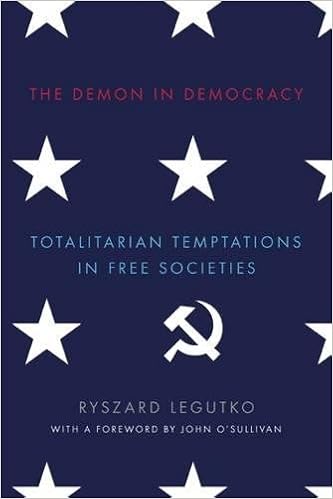
Professor Ralph Wood, the gifted writer and teacher, works his craft at Baylor University. Ralph recommended that I read The Demon in Democracy. I’m glad he did, though it was not a comforting read.
Legutko’s big idea is that the liberal democracy of our day shares many of the same features as communism. There are commonalities such as a penchant for utopianism. There is also an undying belief that one’s system of thought is perfect and so should be immune from critique.
Most of us simply accept that everything about liberal democracies is wonderful so questioning any part of it would be un-American. Actually, the opposite is true. Serious questioning of political institutions is at the heart and founding of our history, something most of us have forgotten.
Legutko teaches philosophy in his homeland of Poland. He is not opposed to progress per se, but finds a troubling hubris at the heart of many modern notions of progress.
More than once I put a marginal note of “no dissent allowed” to characterize the lack of scrutiny most Americans give to the modern notion of liberal democracy. And it is the modern notion, not the older versions of liberal democracy, that is in the author’s crosshairs.
If you want to know more about why serious thinking and free speech (on both the left and right) has gone the way of the Dodo bird, this book has much to offer.
My new essay on Ralph Waldo Emerson:
In controversies like this one there is a common error, it seems to me, that is made. Here is what I posted in response to Heath Lambert’s mea culpa:
Thanks for your mea culpa.
One quick observation: It is common for preachers (and others) to critique someone with no mention given of the person’s name. This, however, is not a problem merely because we live in a digital age where the information can be easily found from a search. It is intrinsically wrong. Either say the person’s name or don’t quote them.
So your apology is appreciated, but I’m afraid you run afoul of describing the gaffe as wrong because of being in a media-soaked culture. It is not instrumentally wrong. It is intrinsically wrong.
Last summer our family visited the 9/11 memorial. If you are near New York City, I encourage you to stop by.
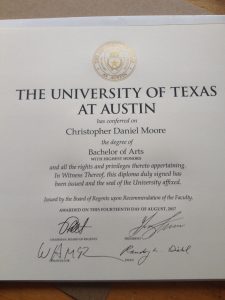
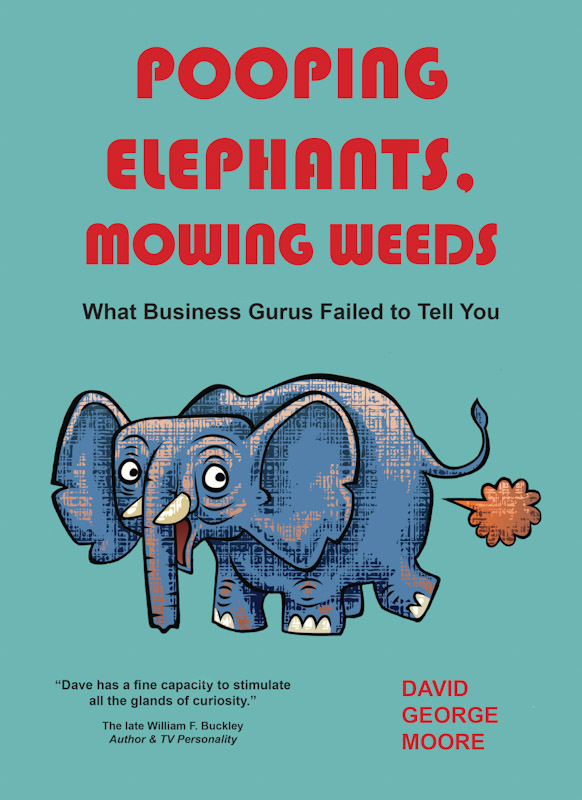
I went to the mail box and found this: