INTERVIEW: WENDELL BERRY BOOK
Leave a reply

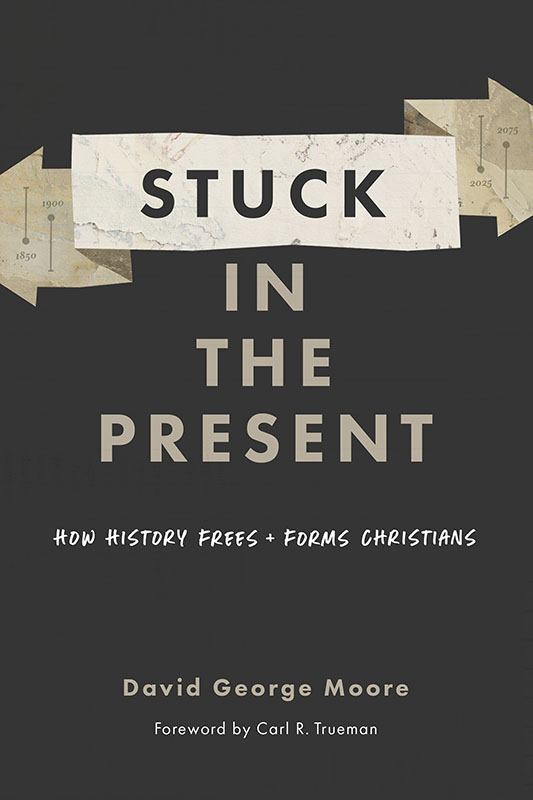
Stuck in the Present
There are many reasons I am not a Roman Catholic, but one certainly is the pervasive, historic, and systemic secrecy. Many examples could be offered. For example, the secrecy of the curia coupled with the condescending clericalism I’ve seen firsthand from priests in spite of what Vatican II says about learning from the laity are just a few.
It stretches credulity to think the Roman Catholic church can properly handle the ongoing (that word is key) sex abuse given the Roman Catholic’s long and problematic history.
And for the record, I taught in Poland and know many dynamic Christians who are in the Roman Catholic church. I just think the overall system is badly broken and lacks the proper theology in doctrine, leadership, and praxis to make things right.
There are similar, but not identical reasons that I’m not Baptist. Though I am sympathetic to Baptist theology, and though the Southern Baptist Convention is not as secretive as the curia, there is much that still gives me concern.
HT: The Way of Improvement Leads Home
I recently read McEntyre’s Make a List which was terrific. I have been wanting to read Caring for Words in a Culture of Lies for some time and finally got around to it. It did not disappoint.
This book will inspire you to see the beauty and power of well-crafted words.
Not that this was the author’s explicit purpose, but it helps us read Scripture more carefully.
My interview with Gerald McDermott on his terrific new book, Everyday Glory:
My latest essay:
| From the Winter 2018 issue of Knowing & Doing: | |||
An Encouragement to Read Augustine’s Big Book, The City of Godby David George Moore |
|||
When people ask Pastor Tim Keller why he reads so much, he simply says, “I’m desperate.” Keller is desperate for insight to help himself and others. I resonate deeply with this sentiment. In fact, it seems very odd to me that any Christian, especially pastors and those in full-time vocational ministry, would be needing to explain/justify the need to read. I should also say that I am constantly stunned by how many pastors and those in full-time vocational, Christian ministry do not read or read books not worthy of their time.
I was recently asked by a friend about my own reading habits. Here is what I told him:
I usually have a book with me wherever I go. I have them for appointments so don’t mind at all when someone is late! If I have a package to take to the post office, a book will be with me. And the DMV or waiting for a haircut are great times to read. You get the picture. There are lots of places/times to redeem the time.
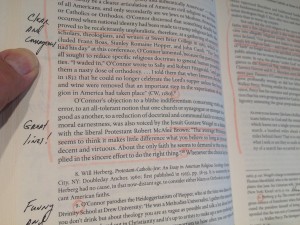
On top of these haphazard things, I read intentionally 50-60 important books per year and peruse hundreds. The 50-60 include lots of highlighting, marginalia, and then sifting out what is most beneficial for teaching, discipleship, and writing projects. I also read several dozen journal or magazine articles.
As I get older, I am rereading the most formative books in my own personal canon. So The Great Divorce was recently reread. Interestingly, C.S. Lewis famously said legitimate readers are re-readers of important books. I think that is true.
Of course, I am always reading Scripture which this year means 2-4 chapters of meditative reads with note taking and highlighting. Scripture memory and review are daily disciplines which go back over forty years ago to my early college days. Then ten verses of my Greek NT along with some vocabulary review and basic grammar.
People regularly mention that I have a good memory. I think that is true to some extent. However, let it be known that review, review, review is a major staple of my life.
Theologians are generally leery, even disdainful (usually in quiet, socially accepted ways!) of “lay” people. And so-called “lay” people tend to return the favor. There are many reasons for this, and Keith Johnson helps unpack them for us.
Johnson’s book is desperately needed since the animus between professional theologians and the church is acute and does not seem to be getting any better.
The author provides a good historical sketch of how theology moved away from the church and found itself in the academy. This offers perspective for how we ought to proceed in understanding the challenge of wedding theology to the church.
Johnson writes with a gracious touch but makes clear how we all need to make amends for our less than Christlike behavior.