
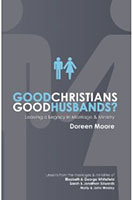

Some good advice from a happy humanist:

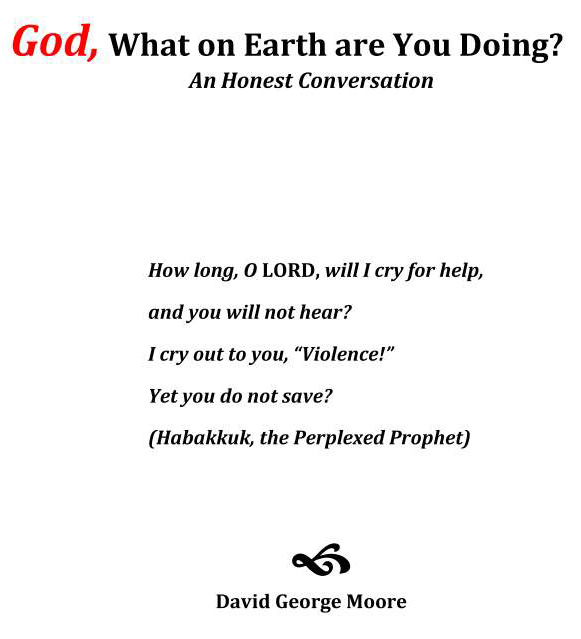
God, What on Earth are You Doing?
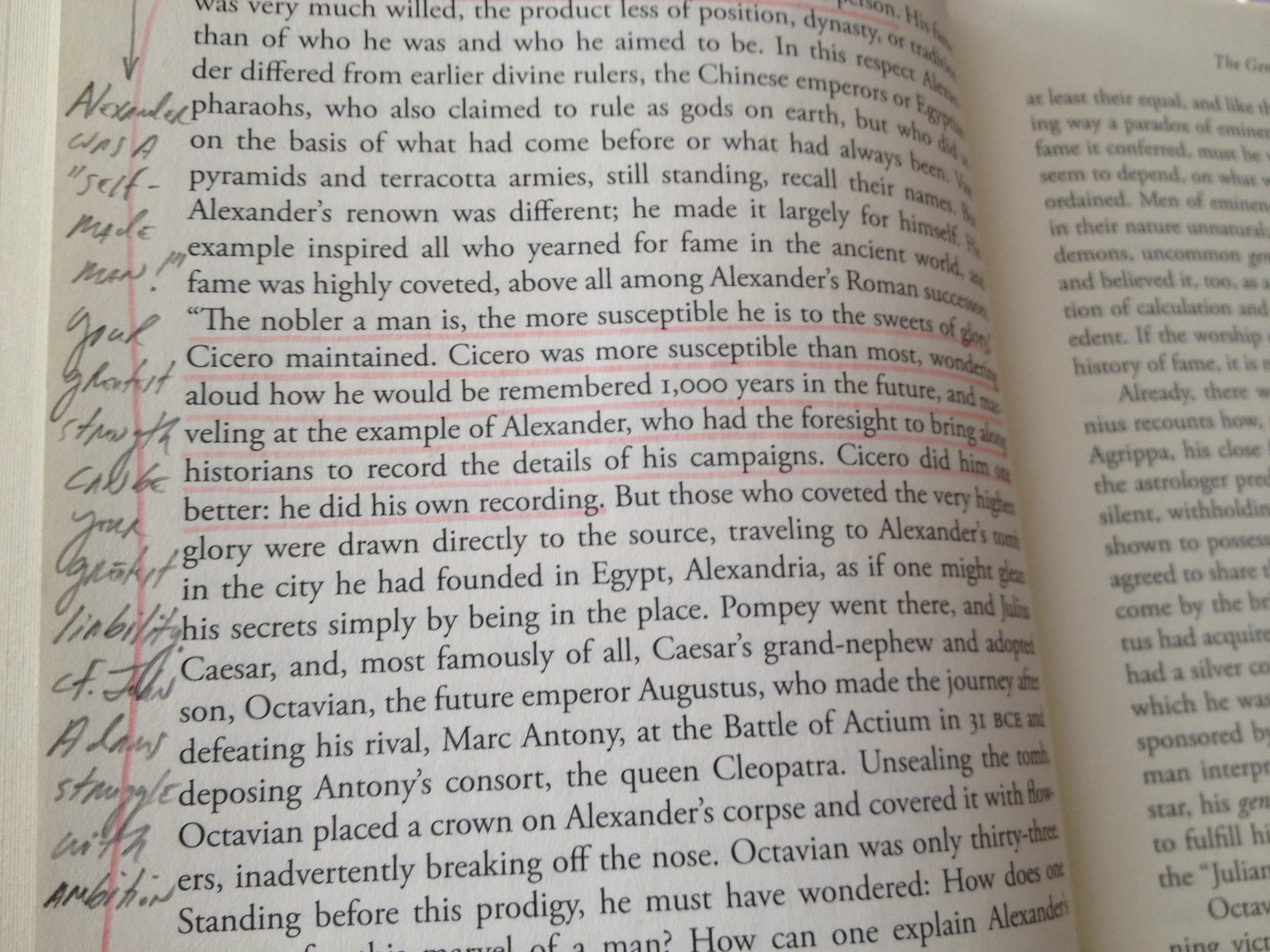
Above is a picture out of my copy of Augustine’s Confessions.
I am listening in parts to a long interview with Maria Popova, curator of Brain Pickings (recommended yesterday). During the interview, Popova and Tim Ferris, the interviewer, bemoan the fact that publishers limit how many quotes you can easily access on Kindle. The number is high, but there is a limit and the only way around it is time-consuming.
So I will continue to read books the old fashioned way!

Well worth stopping by: http://www.brainpickings.org/

David Brooks: Burke is famous for his belief in gradual change. He didn’t believe in revolutionary change because he thought that society was too complicated to be planned through reason and remade according to that plan. My students [at Yale] were divided on this. Some saw wisdom in this modesty, pointing to failed efforts to remake societies, ranging from the war in Iraq to the Russian revolution. Others pointed out that most systems are constructed by those in power for those in power. If you don’t have radical change, you just allow entrenched privilege to stay in power forever.

“The idea that some lives matter less is the root of all that’s wrong with the world.”
—DR. PAUL FARMER
Chief Strategist & Co-founder of Partners in Health

Tim Savage is the pastor of a church back in my hometown of Phoenix. I vividly recall Tim telling me that Morna Hooker, his doctoral supervisor at Cambridge, seemed to understand the pathos of Paul better than many male, Pauline scholars.
Hooker can hold her own intellectually against any male New Testament scholar, but it does seem many (not all) women may have a bit of an edge in picking up the less than rational components.
Allow me to clarify a few things, but please know my thinking in this area is provisional and partial. Not much is set in stone.
“Less than rational components” does not equal anti-rational. Like Pascal, I think “the heart has its reasons that reason knows not of.” This certainly does not make these “less than rational” things irrational.
As to an example, perhaps we could look at Paul’s affliction which resulted in despair (II Cor. 1:8,9). We don’t know for sure, but perhaps some of that affliction was not physical in nature. And maybe a female scholar might be more sensitive that the non physical affliction of the “concern for all the churches” could’ve contributed to Paul’s despair.
As a male who has a strong gift of discernment, I still find my wife (a summa cum laude graduate of seminary, so plenty capable on the “rational” stuff) picking up clues, especially with our sons, that I miss at times. I must add though that I also pick up clues that she sometimes misses, which is why I said my observations are “provisional and partial.”
As Christians, we love hearing testimonies of God’s faithfulness. It encourages us when our own faith is failing. We are reminded that God still works in peoples’ lives. All this is good.
The tricky thing is the hearer must be careful to not become like Simon Magus. You may recall how he wanted to do miracles just like Peter and John. Simon erroneously thought he could pay for something like this. We are not as crass, but we hear how God answered someone’s prayer and we look for the secret which made it all come about. Let’s say the person communicates that God convicted her to fast one day a week. Ah, that is the trick. If I fast one day a week, I can also count on God answering some of my most cherished prayers.

A sample of Reno’s words: “…the discussion seems to want something impossible: ideals without judgments, goals without rules, principles without ‘discrimination.’ This reflects the incoherence of modern liberal culture…”
The full piece is here: http://www.firstthings.com/blogs/firstthoughts/2014/10/catholicism-sex-and-marriage