Fascinating piece with wonderful pictures:
HT: Donald Whitney Twitter

God, What on Earth are You Doing?
Fascinating piece with wonderful pictures:
HT: Donald Whitney Twitter
My own reading is summarized by the acrostic GROWTH.
G: Greats which the widely recognized classics. And since you should not just read the greats, but reread them that is happening more as I age. So a read and then reread of The Taming of the Shrew by Mr. Shakespeare is common . By the way, I did not start reading Shakespeare until my early forties. There is hope for anyone!
R: Reviews I need to write or books for upcoming interviews.
O: Other reading that doesn’t neatly fit in the five main categories. It is only as time permits which is rare! These kinds of books might find their way on vacation…which has also been rare these past several years.
W: Word of God. Commentaries and any book which helps me know the Bible better. And yes, I like to read commentaries cover to cover like real books.
T: Teaching preparation which can be just about anything.
H: History which I am regularly reading.
Repost
Much food for thought here:
https://www.youtube.com/watch?v=Ld8ELWABcQc
HT: John Fea’s blog, The Way of Improvement Leads Home
Democracy in America by the Frenchman, Alexis de Tocqueville is one of my favorite books. Tocqueville had an acute eye for this budding American experiment in democracy. In light of the debate tonight, listen to his wisdom and keep in mind he wrote this in the 1830s!:
“A false notion which is clear and precise will always have more power in the world than a true principle that is obscure or involved.”
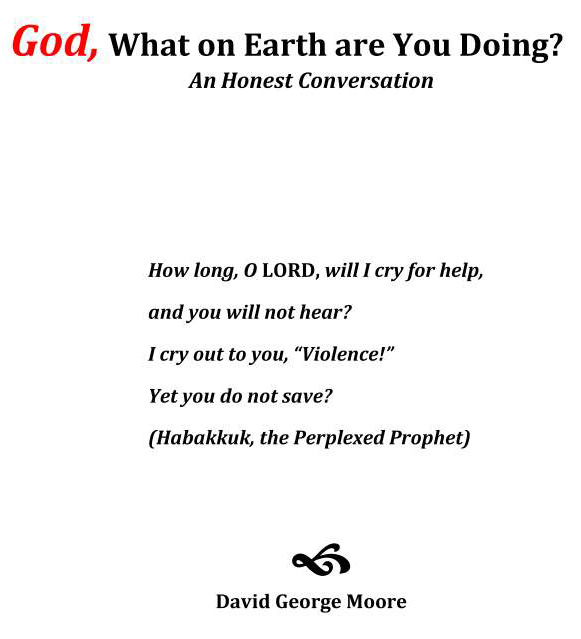
I am writing some smaller “commentaries” on the Bible. I recently finished one on Habakkuk titled, God, What on Earth are You Doing? The following is from my introduction to Genesis:
Telling a story well is powerful. Telling a powerful story can be life altering. Even best selling books for the business community[1] know that data alone can be lifeless and so not terribly motivating. Tell a story worth telling and people’s curiosity is piqued. Their imaginations are engaged. They ready for action. The Bible tells a great story so seek to know and communicate it well.[2]
[1] You see this throughout Kouzes James M. and Barry Z. Posner, The Leadership Challenge 4th Ed. (San Francisco, CA: John Wiley & Sons, 2007). Also see Tom Morris, The Art of Achievement: Success in Business and in Life (New York, NY: MJF Books, 2002), 19-21.
[2] By the way, too many Christians think they know the story of the Bible well. They have sat in church for many years and heard “all about Abraham, Moses, Jesus, Mary, and Paul.” Actually, most only have superficial familiarity with the Bible.
First, let me say that I know a number of Dallas Theological Seminary (DTS) graduates who are careful students of the Bible. Among the faithful, I have recently been blessed to know Jon Davies, the teaching pastor at Brenham Bible Church. Jon handles the Word with reverence and diligently applies himself in the study. Last, and certainly least, is the fact that I myself am a graduate of DTS. Though I am “agnostic” on certain, secondary doctrines other DTS graduates hold, I remain grateful to God for the indelible impact of both professors and students.
Back to the subject line of this post…That is what I overheard from a theologian who some would say holds to a less than “conservative” position of the Bible.
I was in the bookstore of the seminary where this particular theologian teaches and could not help but eavesdrop on the conversation. The theologian said to her friend, “I was just on vacation and so we went to the church my in-laws attend. A Dallas Seminary guy was preaching. It is amazing how poorly he handled the Scriptures even though he believes in the inerrancy of the Bible. I don’t believe in inerrancy, but I treat the text of the Bible much more carefully than him.”
Holding to inerrancy is no safeguard against handling the Word of God in a sloppy manner. Holding to inerrancy also won’t keep you out of bed with another man’s wife as the evangelical landscape makes painfully clear.
Do you hold to inerrancy? For a few brave souls out there, you may want to declare that you don’t even know what it is, but you have heard it is important!
Repost
“As the number of books on leadership skills and strategies increase, the number of available leaders decrease.”
I say this, of course, with my tongue firmly in cheek.
There is a very serious point that must be made: leaders don’t become that way by reading books on steps and strategies or simple formulas for success. Leadership can be messy which is not the sort of thing that is easily reducible to cleverly laid out principles.
What is one quality you respect the most in the best leaders you have seen?
Repost
My own reading is summarized by the acrostic GROWTH.
G: Greats which right now is a reread of The Taming of the Shrew by Mr. Shakespeare. And I did not start reading Shakespeare until my early forties. There is hope for anyone!
R: Reviews I need to write or books for upcoming interviews. I have already read many terrific things for my show, “Moore Engaging,” and will be sharing those in the months ahead.
O: Other reading that doesn’t neatly fit in the five main categories. It is only as time permits which is rare! These kinds of books might find their way on vacation…which has also been rare these past several years.
W: Word of God. Commentaries and any book which helps me know the Bible better. And yes, I like to read commentaries cover to cover like real books.
T: Teaching preparation which can be just about anything.
H: History which I am regularly reading.
Repost
When it comes to writing history, Robert Caro is a giant among men. This past year, Caro released the fourth installment of his projected five-volume biography of the 36th president of the United States, Lyndon Baines Johnson. Caro has devoted nearly 40 years researching and writing The Years of Lyndon Johnson, and he does not appear to be letting up anytime soon. Caro’s life ambition crystallized in his mid-thirties – to write the definitive biography of LBJ, a biography that would truly stand the test of time. This goal has propelled Caro vocationally throughout the lion’s share of his life and now sustains him into his sunset years.
Caro’s The Years of Lyndon Johnson has served to percolate increased interest in the 36th president and to position its author as an internationally recognized biographer. Yet, as interesting as Caro’s ever expanding biography of Johnson is, a public intrigue with Caro himself has also piqued. Indeed, Caro is a fascinating figure; we might even say a cultural icon.
Caro is eccentrically devoted to his life’s work. His lifestyle and work ethic resemble a 21st century sweatshop, albeit civilized. For decades he has slavishly worked seven days a week, rarely breaking his routine even for holidays. He enjoys no professional help, no research assistant or transcriptionist. Caro foregoes modern conveniences such as a personal computer, preferring to draft his manuscript in longhand. He dresses in a suit every day, only to work in solitude in his Manhattan office. Caro’s office is a Byzantine gamut, littered with copious notes, stacked files, marked books, and walls covered with charts and graphs. Eyewitnesses testify that Caro’s work environment more resembles a war room than a writing den.
Caro’s life-long effort to unearth Johnson’s life in pedantic detail is impressive enough, but not altogether satisfying for the accomplished author. Rather, Caro aspires to know the mind and heart of Johnson; not merely Johnson’s actions, but what propelled his actions. Thus, Caro has coupled with his assiduous research a practice of imbibing Johnson’s way of life. Over the years, Caro has relocated his family in order to spend extensive time in Texas, Washington and even Vietnam. All of this has been in an effort to feel what Johnson felt, see what he saw, and know what he knew. Herein lies Caro’s genius. He is driven by a desire not merely to master the facts of Johnson’s life, but to know the very essence of the man.
As followers of Christ, perhaps we can learn something about discipleship from Robert Caro. When we weigh Caro’s devotion to Johnson in the scales of our pursuit of Christ, we may be found wanting. Caro has settled for nothing less than a deep and personal knowledge of his subject, LBJ. Too many Christians settle for a superficial knowledge of Christ that fosters a superficial commitment to Him.
But, we need not look to Caro to be chastened. We can simply look to the Apostle Paul, who aspired to know Jesus, writing, “I count all things to be loss in view of the surpassing value of knowing Christ Jesus my Lord… that I may know him and the power of His resurrection and the fellowship of His sufferings, being conformed to His death” (Phil 3:8,10).
Our eccentric commitment may never be classified alongside Robert Caro’s in the world’s eyes, but knowing Jesus – and laboring to make him known – will prove unmatched in personal benefit and eternal consequence.
HT: www.jasonkallen.com, April 5, 2013
Repost