Just two minutes, but very much worth your time! HT: Francis Beckwith
A CLARION VOICE AMIDST CONFUSION
Leave a reply

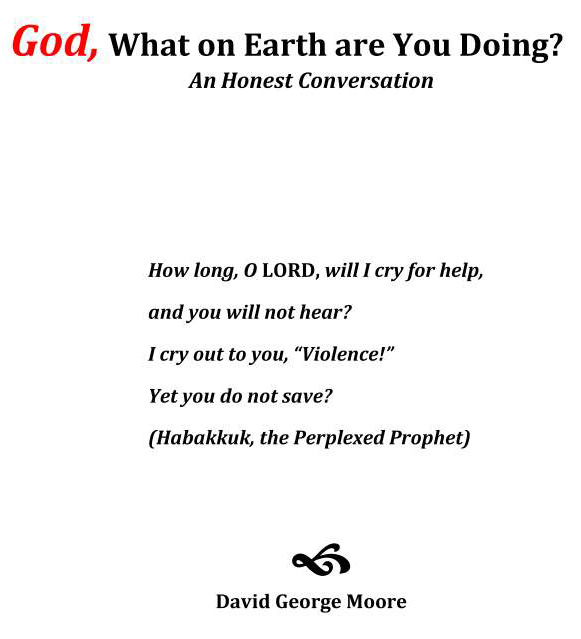
God, What on Earth are You Doing?
Just two minutes, but very much worth your time! HT: Francis Beckwith
The apostle Paul said many provocative things. These things were not simply provocative. More importantly, there were true. For example, Paul said that we ought to “follow Christ as he did” and in Philippians Paul writes, “The things you have learned and received and heard and seen in me, practice these things, and the God of peace will be with you.”
We know Paul valued relationships. From his earliest days as a Christian Paul benefited greatly from mentors like Ananias and Barnabas, later peer relationships like Silas were a huge blessing, and then Paul built into the lives of many people like Timothy, his “true son in the faith.”
Paul says if we do what he did the “God of peace will be with us.” What a promise!
How should these relationships inform our own convictions?
Wow! HT: TONY REINKE
A few years back I was pondering the practical implications of something in the gospels, so I wrote New Testament scholar, Scot McKnight. Here’s my question to Scot:
Is there a possible clue from Matt 12:39ff that our “apologetic argument” ought to focus more on the history of Jesus resurrection rather than more speculative or philosophical lines of evidence? Not exclusively for there are others passages which showcase other evidence but as an emphasis of sorts?
Scot’s answer was: 100%!!!!
Many American Evangelicals mistake the American variety of Anglicanism for either the British variety, or worse still, the liberal Episcopalian church. The Anglican Church North America (ACNA) is decidedly under the authority of Scripture and quite clear about the work of Christ on the cross.
I now gladly attend an Anglican church, but I am not Anglican. There are four major reasons I give to those wondering why we shifted from low church evangelicalism to the Anglican church: an intentional theology of the body (and the physical world), a conscious tie to the whole church throughout its history and in the world today, truly keeping primary doctrines primary which translates to giving much space to differ over a variety of non primary doctrines, and a protection against personality cults emerging with respect to the ministers. Much could be said about those things and perhaps later I will offer more details…
The eminent Catholic scholar, Michael Novak, has died. His quiet genius influenced many of the more popular names you may know. In any case, there is a nice tribute to him below.
One of the best quotes from him on the possibility of humans creating some utopia: “To know oneself is to disbelieve in utopia. To seek realism is to learn mercy.”
“Being ignorant is not so much a shame, as being unwilling to learn.”
HT: Thomas Kidd
From Pastor Derwin Gray:
“The church should be a tutor to the world of what racial reconciliation looks like.”
“Teamwork makes the dream work.”
Here’s a snippet from my interview with Larry Hurtado of the University of Edinburgh:
Moore: It’s become somewhat of a self-evident truth that early Christianity only appealed to the down and out. Is that accurate to the historical record?
Hurtado: For several decades now that old notion has been discredited among scholars of early Christianity. Studies of the people named and described in earliest Christian texts show that, right from the earliest years, they included craftsmen, merchants, and owners of businesses. Of course, there were also slaves and poor among believers. By at least the second century, there were also believers from upper levels of Roman society. That upward progress socially is likely part of what prompted pagan sophisticates such as Celsus to attack Christianity so vehemently.
The full interview is here:
http://www.patheos.com/blogs/jesuscreed/2017/02/18/larry-hurtado-interview/