
God, What on Earth are You Doing?

I THINK THIS IS BAD FORM

Before I started blogging, I made up my mind about certain practices I would try to keep.   I was an avid reader of various blogs for several years, but noticed a few patterns of some writers.  One deals with valid criticisms readers raise.  It bothers me to see a thoughtful push back of an author’s post and no response.  The following is an actual exchange I had with a blogger over this very practice:

Me: I regularly read your blog and gain much from doing so.

One question and this seems to be pervasive in the blogosphere: When one writes or posts a criticism of someone (as in your case with X) it seems incumbent upon the poster to be ready to interact with readers.  I speak from some experience.  Scot McKnight posted some of my Patheos work [e.g. “An Open Letter to Karl Giberson”], so I made myself available to interact with folks.  There were 100+ comments so I interacted with any comments directed my way.  Even though you are directing folks to someone else’s critique, your post by the critic of X makes it evident you agree with his take.

All this leads to me wondering why you are not interacting with your own readers and their legitimate push backs?

Best, Dave

His Response: I don’t necessarily agree. There are some blogs that don’t allow comments at all, so it’s certainly not a necessity. I do try to be available to comment at times, but other times I just have too much going on to dedicate that kind of time.

At this point I’m glad to just point people to [the critic’s] writing as I think it nicely summarizes each of my concerns.

My Response to His Response: Please bear with me…

I will invoke the ghost of Schaeffer on this one: isness does not equal oughtness.  Yes, lots of blogs do all sorts of things, but that is not much of an argument, is it?

The time issue is certainly understandable, but it seems there is a Christian priority to make space when one invites comment which your blog does.  Rerouting folks to the [critic’s] is of course perfectly fine, but neither one of you has answered the important question of whether you are in disagreement with other important leaders.

Dave

No response


WHY DON’T WE KNOW ABOUT THIS GUY?

He is a major character in five chapters of one of the most important books of the Bible: Exodus.

Bezalel and his buddy Oholiab had funny sounding names, but they have much to teach us.

In fact, Bezalel was not only skilled with his hands, but also called to train others (Ex. 35:34).  Talk about the dignity of all work!

R. Paul Stevens mentions in his fine book, The Other Six Days, how the clearest and earliest example of the Holy Spirit falling on someone in the Old Testament is Bezalel (Ex. 31:3).  And he was neither prophet nor priest.  He was a craftsman, skilled and creative so he could make beautiful things…for God!

And here is a shocker.  I dug a bit and found out that the Babylonian Talmud (third to fifth centuries AD) asks how old Bezalel was when called by God to build the tabernacle:

Now, how old was Bezalel when he made the Tabernacle? Thirteen years, for it is written… (Babylonian Talmud: Tractate Sanhedrin 69b)


ATHEIST ACCURATELY ARTICULATES CHRISTIAN FAITH

Unitarian minister, Marilyn Sewell asked renowned atheist, Christopher Hitchens the following question:

Sewell: The religion you cite in your book [god is not Great] is generally the fundamentalist faith of various kinds. I’m a liberal Christian, and I don’t take the stories from the scripture literally. I don’t believe in the doctrine of atonement (that Jesus died for our sins, for example). Do you make any (sic) distinction between fundamentalist faith and liberal religion?

Hitchens: I would say that if you don’t believe that Jesus of Nazareth was the Christ and Messiah, and that he rose again from the dead and by his sacrifice our sins are forgiven, you’re really not in any meaningful sense a Christian.

(Posted on Portlandmonthlymag.com, Dec. 17, 2009)

What is fascinating is that Christian scholar, J. Gresham Machen, and Christopher Hitchens agree on this very point.  In his brilliant and beautifully written book, Christianity and Liberalism, Machen said “liberal Christianity” was a contradiction in terms.

WHAT IS A CALVINIST?


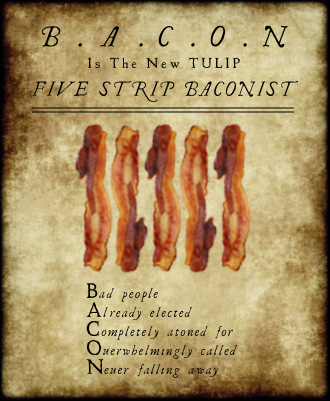
What truly makes someone a Calvinist surprised me so it may surprise you.  

Stay tuned for my essay: “Coming Clean…I guess I am not a Calvinist after all.”  

Scot McKnight’s Jesus Creed blog will be posting it.


BOOK OF REVELATION: CALVIN OR EDWARDS?


I recently finished Ravished by Beauty: The Surprising Legacy of Reformed Spirituality.  Belden Lane has written a wonderful book which I include in a piece soon to appear on Scot McKnight’s blog, Jesus Creed.

Lane makes the point that John Calvin wrote commentaries on most books of the Bible, yet steered clear of Revelation.  On the other side of the ledger, Jonathan Edwards did not really write Bible commentaries, but he wrote a lot on the book of Revelation.  It is interesting to note the difference among these two stalwarts of the Reformed faith.

So how about you?  Do you think there ought to be more or less teaching on the book of Revelation?  

PASTOR HITS HOME RUN…FOR HIS FAMILY!

J.R. Vasser is the founding pastor of Apostles Church in New York City.  God has used J.R.’s leadership to be a blessing to many.

This past Sunday Vasser mentioned he was leaving Apostles.  Not because of immorality.  Not because of some other ministry.  Not because he is discouraged. 

So why is Pastor Vasser leaving?  He is leaving for his family’s emotional and spiritual well-being.  Read his resignation letter and pray for more men like him!

http://www.apostlesnyc.com/event/460675-2013-06-10-important-update-from-pastor-jr-vassar/


MOST MISINTERPRETED BIBLE VERSES?

At the end of May, Scot McKnight asked his readers what they thought were the most commonly misinterpreted verses in the Bible.  Even though there were many responses, I was surprised to find most of the ones on my own list missing.   http://www.patheos.com/blogs/jesuscreed/2013/05/31/most-mis-interpreted-bible-verses-whats-at-the-top-of-your-list/
Among an array which I hope to write about in the near future, let me mention just one: I Cor. 8:1.
The pithy “knowledge puffs up, but love edifies” is frequently slung out as a warning that knowledge is somehow intrinsically corrosive.  The conclusion many tragically make is to steer clear from acquiring too much knowledge for it will make you arrogant.  Love is where it is at.  The first commandment after all is to love God, not know about Him!
There are many problems with this line of thinking.  Let me briefly sketch out a few.  The context of I Cor. 8:1 addresses those who feel the freedom to eat food sacrificed to idols and those who don’t.  Paul warns against allowing “this knowledge” (as the ESV helpfully renders it) which gives some the freedom to eat the food to guard against being critical of those who don’t have the same freedom.  It is knowledge misused not knowledge in and of itself that Paul is warning about.
Furthermore, we know that Paul makes many appeals to knowledge and right thinking throughout his teaching on Christian growth, so knowledge per se is not in Paul’s spiritual cross hairs.  A brief, but wise summary of these is found in John R.W. Stott, Your Mind Matters (Downers Grove, IL: InterVarsity Press, 1972), 41-42.
It would make no sense for the apostle Paul to diminish the importance of knowledge when he warns against “thinking like children” and the need to be “mature in our thinking.”   And this occurs in the same book as the misapplied verse of I Cor. 8:1 (see I Cor. 14:20)!
Our real nemesis is pride not knowledge.  Pride can tempt those who know a lot, but pride can equally tempt those who may not know as much, but are prideful about how zealous they are.  I can attest to pride’s seductive allure with both extremes.
Acquiring knowledge is viewed as virtuous in the book of Proverbs.  And knowledge is much more closely related to wisdom there (and vice versa) than many Christians appreciate, but that will have to wait for another day.
In our pursuit of knowledge (again a noble endeavor) we must remember that pride often lurks to flatter our egos, but knowledge is not our enemy.  Pride is our true nemesis and it is ever-present to entice knowledgeable Christians who look down on those who don’t think in very sophisticated categories.  It also tempts those who are zealous to look down their spiritual noses at those who are not “doing so much for the kingdom.”  As some of my Cru friends used to say, “We are the Green Berets” of American Christianity.  Many times we were encouraged to “attack hell with a squirt gun” while being warned over pursuing too much education.
We need to remember pride is one of the seven deadly sins not knowledge!

YOUR FAMILY IS NOT YOUR HOBBY!


Below is a classic example of what I have seen on many résumés.  This particular one comes from a seminary professor, but I’ve seen a bunch on the résumés of pastors as well.  In the case below with our seminary friend, we can find solace that mowing the yard got nudged out by his interest in his family!

Our seminary professor at least uses the word “interest” rather than the more ghastly label of “hobby.”  Here is how he ordered his interests:

Interests: baseball, reading historical novels, psychology and faith, spending time with family, working in yard, traveling, guitar, movies.

What are your interests or hobbies?  Whatever they may be please delete family from your résumé if you have it listed there!